

With the wide variety available on the market, it is easy to get lost when looking to buy or consume Matcha. Should you rely on the packaging, the brand, the specific terms written on the label, a certification, or even the price? Is the origin of the Matcha also a criterion to take into account?
So many questions for which answers are not always easy to find. In this article, we guide you through the various criteria that help you better understand the quality of a Matcha and make a choice suited to your needs.
To make the right choice, several criteria should be considered: usage, origin, harvest, cultivation method, color, and of course, flavor.
The first question to ask yourself before buying Matcha
Before choosing your Matcha, start by asking yourself how you want to enjoy it.
For a traditional tea tasting experience, Matcha is prepared solely with hot water. In Japan, this preparation is called Usucha (薄茶), referring to a light tea whisked with hot water at 70-80°C. In this case, choose a smooth, balanced Matcha that is pleasant to drink on its own, without adding milk or sugar. This type of Matcha is often marketed under the designation “ceremonial.”
However, keep in mind that the term “ceremonial” is neither a protected term nor an officially regulated designation. This term does not correspond to a quality standard defined by strict specifications and guarantees neither a specific production method, nor a particular harvest, nor even a Japanese origin.
Therefore, “ceremonial grade” alone can cover Matchas of very different quality levels. Two products bearing this label can present significant differences in terms of taste, smoothness, and balance. You could thus be disappointed by a Matcha despite it being marketed under this designation. To make a good choice, it is best not to limit yourself to this term and to look at other criteria used to evaluate product quality.
For a Matcha Latte, a very mild Matcha with delicate flavors is not necessarily the best choice. Indeed, its subtle aromas risk being masked by the taste of milk or plant-based milk, which will then take over.
Instead, opt for a Matcha with a more pronounced taste. A certain intensity and light bitterness can contribute to a balanced Matcha Latte, where the Matcha flavors remain noticeable despite the addition of milk and where the Matcha retains its full place.
For a recipe featuring Matcha, a Matcha specifically intended for cooking will generally be the most suitable.
Caution, however: not all culinary Matchas are created equal. A color leaning towards yellow, gray, or brown, combined with a harsh, earthy, fishy flavor or one reminiscent of dry hay, are all signs that can characterize low-quality Matcha. Using such a product in cooking risks yielding disappointing results, both in terms of color and taste.
In cooking, the main goal is a Matcha with a flavor pronounced enough to remain noticeable after adding other ingredients, such as flour, sugar, eggs, chocolate, or cream. Color also matters, especially to achieve beautiful, intensely green preparations.
Fortunately, high-quality culinary Matchas exist, combining a rich green color with a pleasant and sufficiently present flavor. This is notably the case with Matcha IRO for Cooking Premium Culinary Grade.
Beyond labels: understanding what determines Matcha quality
Since the terms commonly found on packaging, such as “ceremonial,” “premium,” or “cooking,” are not based on a harmonized regulatory definition, it is important to look at more concrete elements: the origin of the Matcha, the harvest period, cultivation methods, and the producer’s expertise.
These elements help us better understand the differences between Matchas and what contributes to their quality.
Origin and harvest period
Matcha as we know it today originates from Japan and relies on expertise passed down and refined over centuries, for more than 800 years. However, Japanese origin alone is not enough to guarantee the quality of a Matcha. In Japan, different quality levels of Matcha exist, generally intended for different uses. Furthermore, not all producers possess the same level of experience or expertise.
The harvest period is another important criterion. Tea leaves intended for Matcha production can be harvested several times a year, up to four times, and each harvest presents its own distinct characteristics.
The first harvest, called ichibancha (一番茶), takes place in spring. This harvest yields the finest tea leaves, which are particularly sought after for high-quality Matchas thanks to often more delicate flavors, rich aromatic profiles, and less bitterness. These Matchas are particularly suited for traditional Matcha tea preparation but can also be suitable for “high-end” Matcha Lattes.
At IRO, the Matcha Premium Ceremonial Grade is crafted exclusively from a selection of the finest leaves from the first spring harvest.
The second harvest, or nibancha (二番茶), takes place in early summer and produces Matchas with a potentially more pronounced character, higher bitterness, and a different flavor profile. This type of Matcha can be interesting to highlight the Matcha flavor in a Matcha Latte.
A blend of leaves from the first and second harvests can also be very interesting to achieve a good balance between delicacy and intensity in a Matcha Latte. This is the approach chosen for our Matcha IRO for Cooking Premium Culinary Grade tea, in which we use a blend of first and second harvest leaves, with a large majority coming from the first harvest. This combination of finesse and character yields excellent results in a Matcha Latte.
The third harvest, called sanbancha (三番茶), generally takes place in late summer. The Matchas produced from it have a much stronger, more bitter, and more astringent flavor. This type of Matcha is not suitable for drinking as tea and will rather be used for medium- to low-quality culinary Matchas.
Finally, the fourth harvest, or yonbancha (四番茶), takes place in autumn. Leaves harvested during this period produce Matchas that are often very bitter and highly astringent, also unsuitable for drinking as tea. This harvest can be used in low-cost, low-quality culinary Matchas or for industrial purposes.
Cultivation methods and their impact on quality
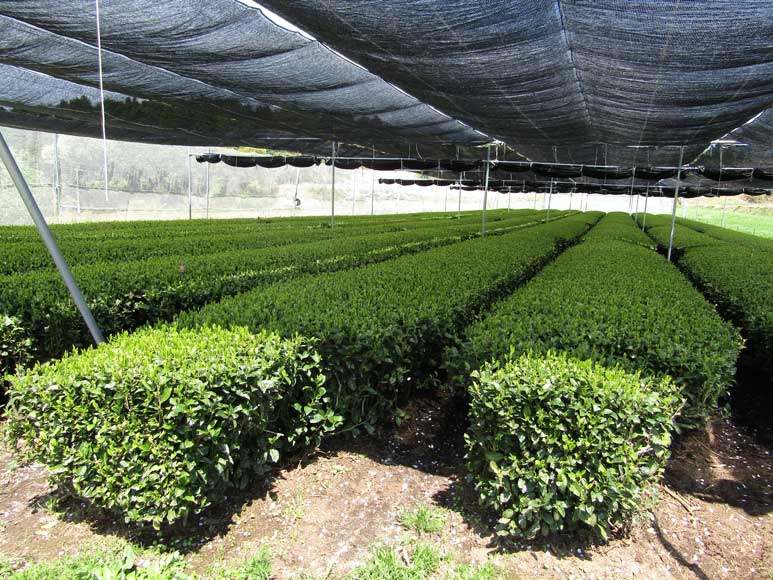
The cultivation method directly influences the characteristics of the leaves used to produce Matcha.
One of the key features of Matcha tea is that it is a shade-grown tea. The tea bushes are kept under shade and deprived of direct sunlight for several weeks before harvesting. This practice notably helps preserve theanine, an amino acid associated with umami and the sweetness of Matcha, while stimulating chlorophyll production, which contributes to its vibrant green color.
The duration and intensity of shading can vary depending on the producers and the desired Matcha profile, but a high-quality Matcha is generally shaded for at least 3 weeks before harvest.
The farming method—organic or conventional—is also a criterion to consider. Excellent Matchas exist from both production methods. However, choosing organic allows you to favor cultivation subject to specific guidelines, which notably regulate the use of plant protection products and fertilizers.
When consuming Matcha, you consume the entire tea leaf, along with its numerous health benefits, but potentially also alongside other substances like pesticides that might have been used in its cultivation.
Choosing a certified organic Matcha ensures a controlled production framework and strict restrictions on authorized substances. IRO Matcha is certified organic, and no pesticides, herbicides, insecticides, or chemical fertilizers are used in its cultivation.
The powder grinding method
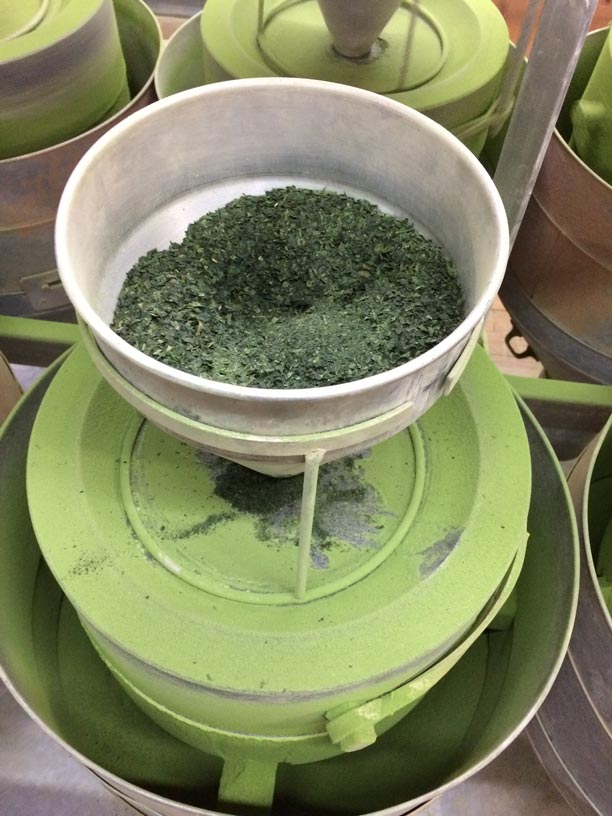
After harvesting and processing the tea leaves into Tencha—the raw material of Matcha—it must be ground into a very fine powder to obtain Matcha.
High-quality Matchas are often ground using traditional stone mills, known as ishi-usu (石臼) in Japan. These rotate slowly, limiting friction heat that could alter the tea’s aromas, color, and flavor. They also yield a very fine and uniform powder, essential for a smooth mouthfeel and the formation of a beautiful layer of foam on top when whisked into hot water.
However, this traditional method is used for only a minority of Matchas because it is costly and relatively low in yield. When the stone mills rotate at the appropriate speed, each generally produces only about 30 to 40 grams of Matcha per hour. Even when running multiple mills simultaneously, the produced volumes remain limited. This is one of the reasons why this method is primarily reserved for Matchas positioned in the high-quality segment.
More industrial equipment also exists, allowing Tencha to be ground into powder at much higher rates. Depending on the machine type and process used, production can reach tens or even hundreds of kilograms per day. These machines help reduce production costs and offer Matcha at lower prices.
However, this production speed can come at the expense of final product quality. Faster grinding, especially when generating more heat or subjecting the leaves to harsher processing, can alter the color, aromas, and flavor of the Matcha, as well as some of its sensitive compounds. The fineness and consistency of the powder may also differ from those obtained with traditional stone mills, which can affect the mouthfeel and the foam quality during preparation.
Craftsmanship: a factor that can make all the difference
Just like with wine or coffee, some producers have developed expertise over years—or even generations—that enables them to craft exceptional Matchas.
Two Matchas grown in the same region, or even the same village, under identical terroir, climate, and environmental conditions, can show significant quality differences.
Matcha production requires meticulous attention at every single stage. The tea bush variety, cultivation management, leaf selection, processing, and grinding fineness all contribute to the final result. It is this combination of factors, paired with the producer’s experience and personal choices, that creates a high-quality Matcha.
Where to find useful information before buying?
Because Matcha tins are generally small, it is not always possible to feature all the details regarding harvest, shading, origin region, or manufacturing methods on the container. The available space is often occupied by regulatory markings, certification logos (such as organic), and necessary translations for distribution in different countries.
To learn more, check the brand’s website. You will often find more detailed information there regarding the Matcha’s origin, harvest, cultivation, and production methods.
Tasting: how to recognize a quality Matcha?
While available details about origin and manufacturing help you understand a Matcha better, tasting remains essential to discovering its flavor profile and knowing if you made the right choice. Here are the points to consider.
Color
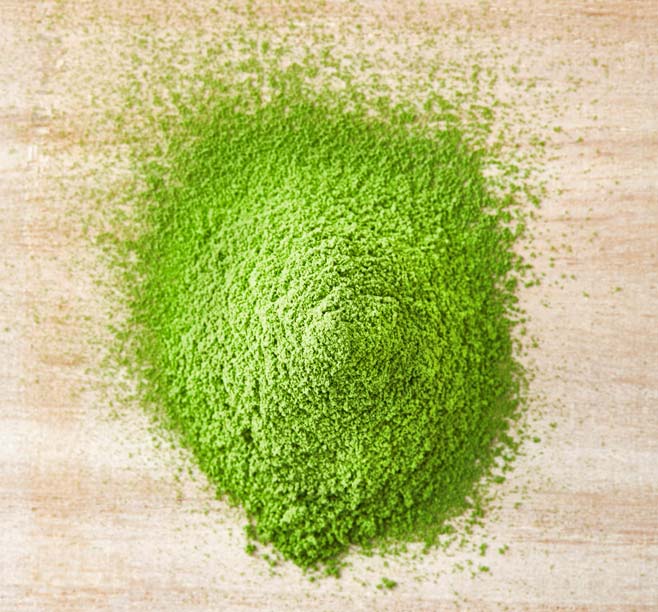
First, observe the color. A high-quality Matcha generally displays a vivid, bright green color. This color depends notably on the tea bush variety (the cultivar) and is closely linked to extended shading before harvest, which promotes chlorophyll accumulation in the leaves. First-harvest leaves will also feature a greener and more vibrant color than subsequent harvests.
A Matcha displaying a dull, yellowish, brownish, or grayish hue indicates an inferior quality Matcha, often sourced from the year’s final harvests, or an oxidized Matcha that has lost its freshness.
Aroma
Next, smell the aroma of the powder. Quality Matcha generally presents a fresh, pleasant, well-rounded, and rich aroma, with sweet notes ranging from fresh vegetal to floral or crisp marine notes.
Conversely, pronounced notes of dry hay or earth, fishy odors, or a harsh, sour, or unpleasant aroma are characteristic of low-quality Matcha.
Foam during preparation
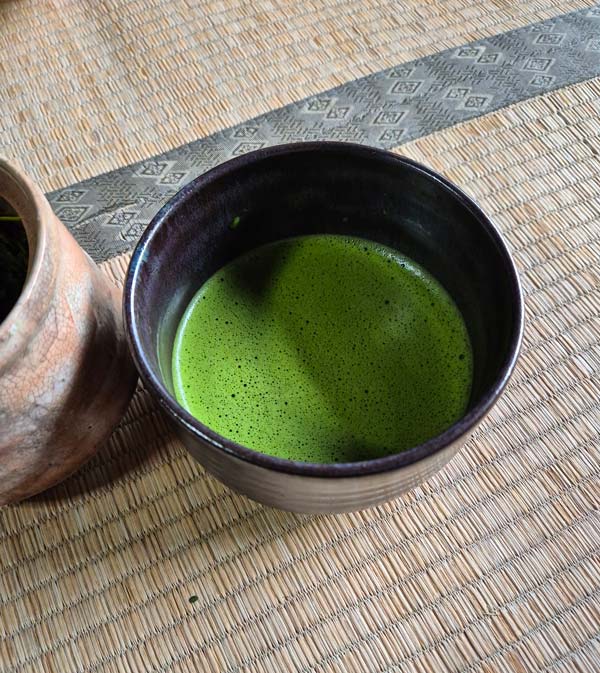
To appreciate your Matcha under optimal conditions and avoid other elements interfering with the tasting experience, prepare it traditionally in a bowl using water at around 70–80°C, then whisk it using a bamboo whisk (chasen).
A well-prepared, high-quality Matcha (which may take a little practice) should display a fine, uniform, and dense foam on the surface, composed mostly of tiny, tight bubbles. Conversely, a lower-quality Matcha may display foam made up of larger bubbles that are less dense and dissolve quickly.
Foam formation also depends on the fineness of the grind, water volume, water temperature, and whisking technique. The absence of foam can therefore also result from improper preparation.
Flavor
Finally, tasting allows you to evaluate what matters most: flavor.
A high-quality Matcha intended to be enjoyed pure generally offers a fine balance between sweetness, umami, freshness, and aromatic complexity. Some Matchas can also reveal an almost sweet sensation without added sugar, or creamy and cocoa-like notes. Overall, it should be rich, complex, and harmonious, with a pleasant, long finish. A high-quality Matcha also exhibits little to no bitterness or astringency.
Note, however: the desired profile depends on the intended use. A Matcha crafted for a Latte may feature a bolder taste and slightly more pronounced bitterness, whereas a Matcha meant to be enjoyed on its own will prioritize refinement and balance.
An important point of attention: storage
Japanese green tea—whether Matcha, Sencha, or Gyokuro—is particularly sensitive to air, light, heat, and humidity. Improper storage accelerates degradation and can compromise its color, aromas, freshness, and health benefits.
Before opening: store in a cool place
As long as the package remains sealed and intact, Matcha keeps relatively well when stored in a cool, dry place away from light, ideally below 20°C.
To preserve maximum freshness over an extended period, Matcha can also be kept in the refrigerator at around 4 to 5°C, provided its packaging is completely airtight.
After opening: limit exposure to air and light
Once opened, Matcha begins to oxidize faster upon contact with air. Its green color may gradually fade, and its fresh aromas can dull. It is best to consume it promptly, ideally within a month of opening, to enjoy its qualities at their peak.
If you plan to consume it within this timeframe and your home stays reasonably cool, you can store it at room temperature in a dry place away from light. However, if your room gets very warm or if you expect it to take longer than a month to finish, the refrigerator is a better option.
Word of caution: once opened, Matcha can absorb odors present in the fridge and suffer from humidity exposure. Protecting it properly inside the refrigerator is therefore essential.
Here are our tips for storing your Matcha in the fridge after opening:
- If your Matcha comes in a tin with an inner bag, always keep the powder inside that inner bag within the tin. Carefully seal the bag after each use, gently expelling as much air as possible. If the bag is not resealable, secure it with a rubber band before placing it back into the closed tin.
- If your Matcha comes in a resealable pouch, seal it carefully after each use, ensuring no powder blocks the zipper track. Then place the pouch inside a second airtight bag (such as a clear plastic freezer bag) to shield it further from fridge odors and moisture.
- When retrieving Matcha from the refrigerator, always allow the closed tin or pouch to return to room temperature before opening it. This prevents condensation from forming upon contact with the cold powder.
Proper storage plays a vital role in Matcha quality: even a premium product can rapidly lose its visual and aromatic attributes if not stored in optimal conditions.
Conclusion: making the right choice depends on your preferences
Ultimately, choosing the right Matcha means finding the one that aligns best with your intended usage, taste preferences, and expectations.
Beyond cultivation techniques, harvest periods, and manufacturing processes, Matcha quality expresses itself in diverse ways: through its smoothness, roundness, elegance, aromatic intensity, or the complexity and harmony of its flavors.
Now that you have key benchmarks to understand the nuances between Matchas and make an informed choice, it is up to you to discover the one that best suits your taste, habits, and favorite way to enjoy it.
🍃 FIND US ON INSTAGRAM! 💚
Recipes, favourite places, discoveries, tea news and giveaways at @matcha.iro
